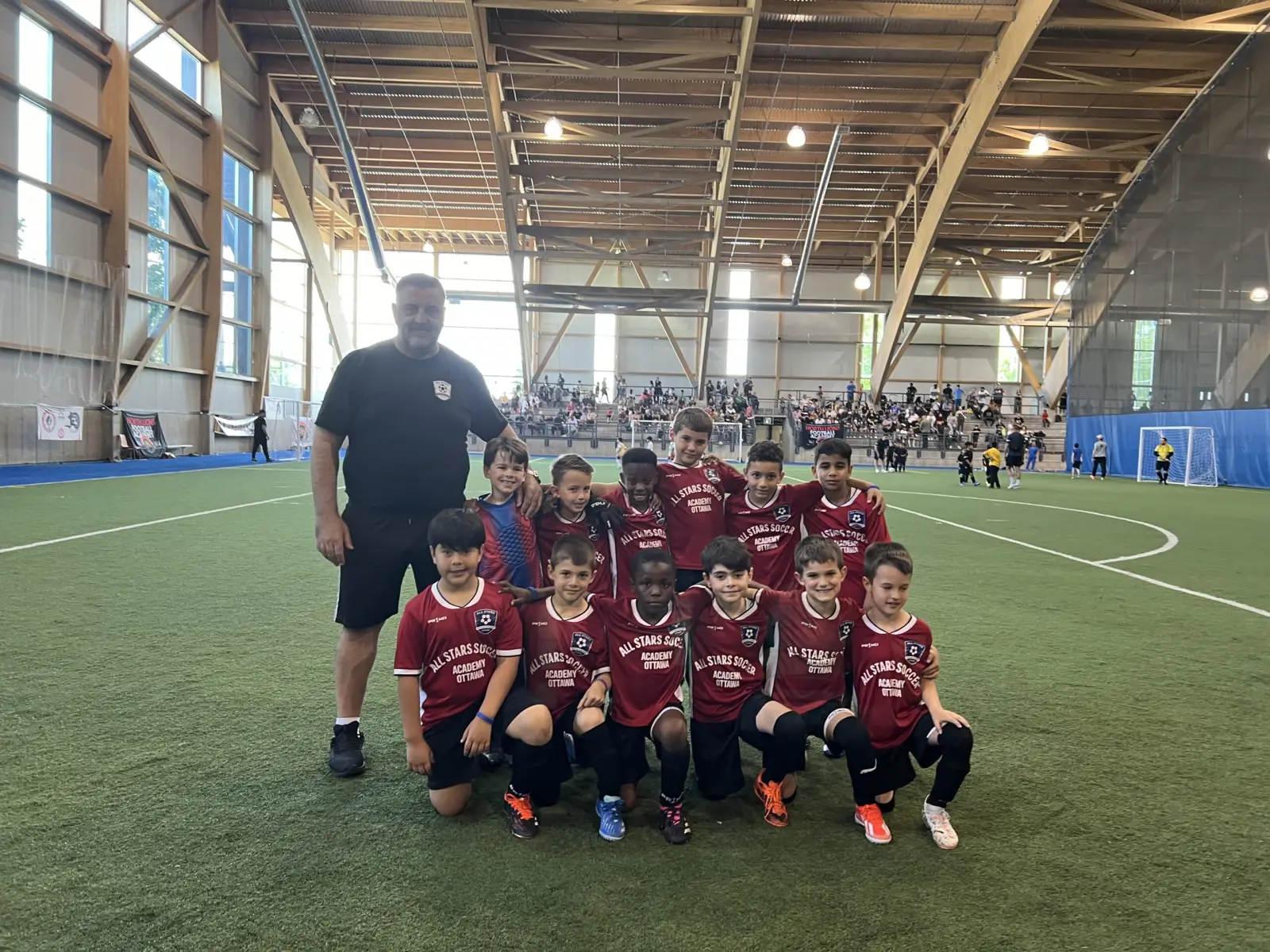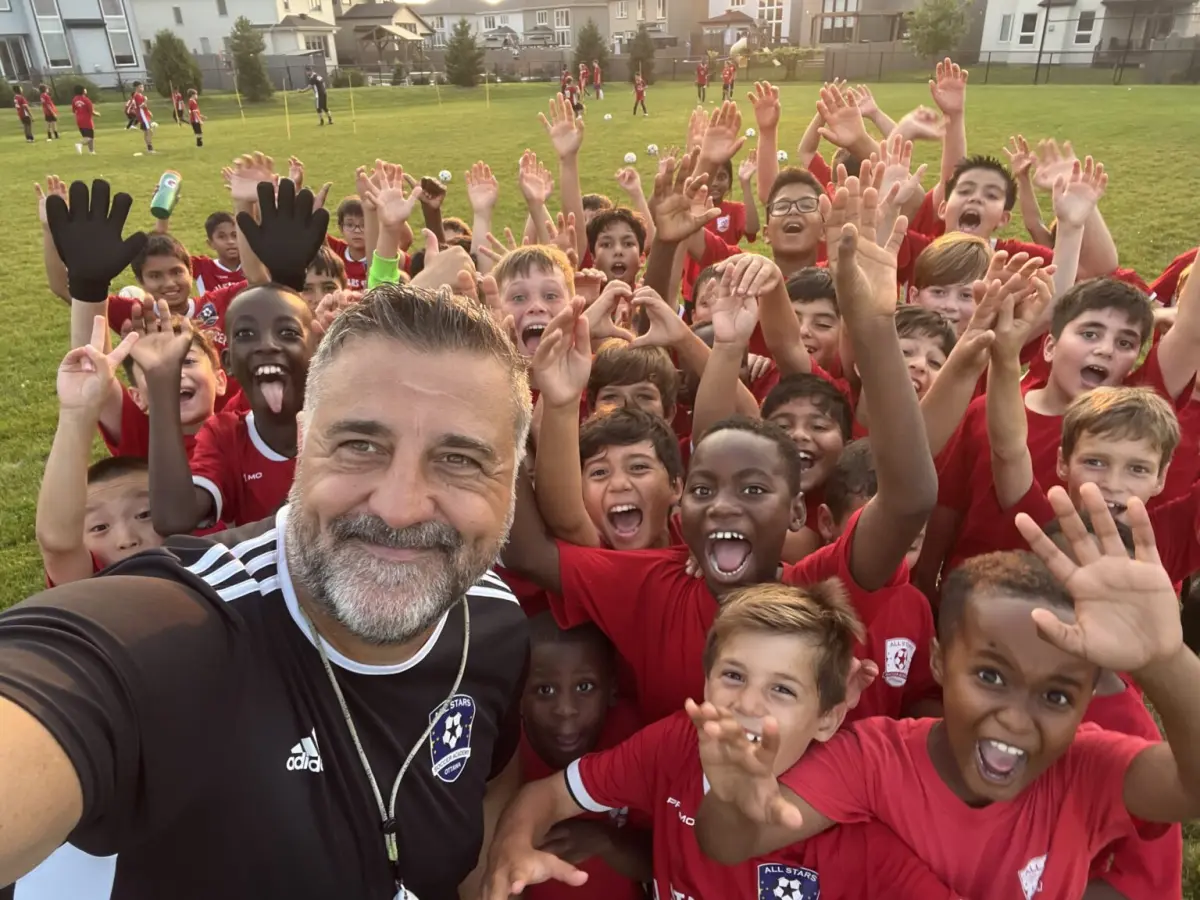

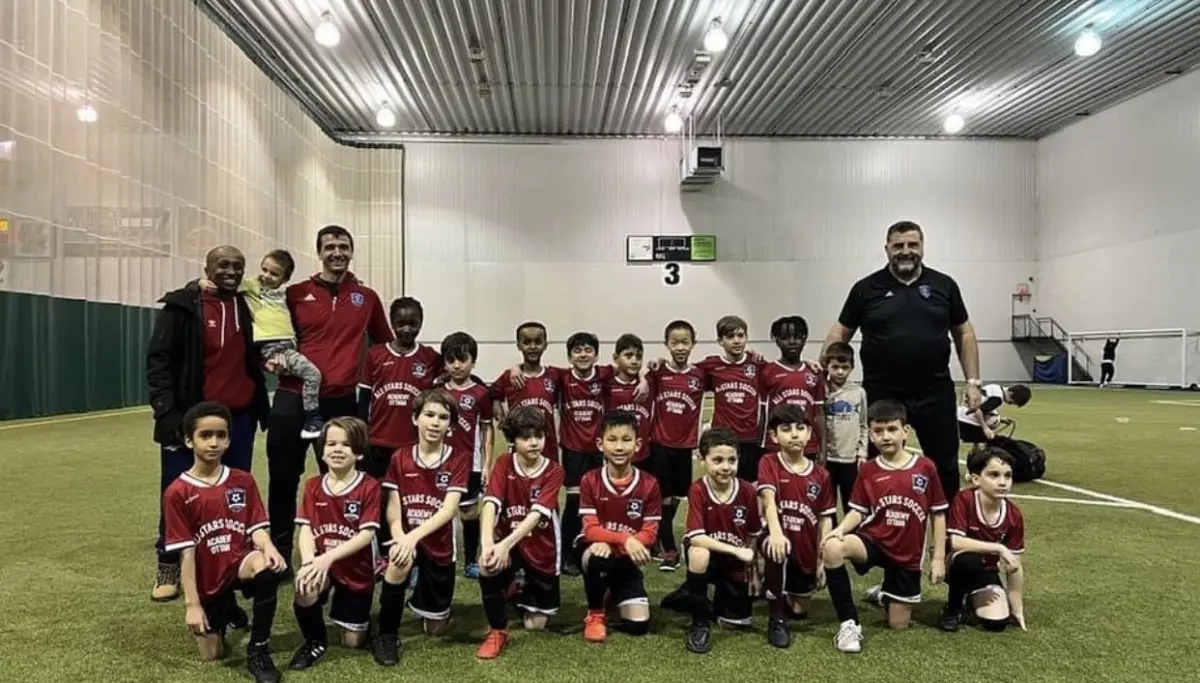
Around Ottawa the outdoor season is short and the gap between the last fall game and the first spring practice is long. The players who come back sharper in spring are rarely the ones who trained the hardest in January. They are the ones who kept a steady, simple routine going all winter and still enjoyed the game when the snow melted. This guide pulls together everything in our training at home series into one off-season soccer training plan a family can actually follow.
Start with the goal, not the schedule
Before you book anything, sit down with your player and pick one or two things they want to be better at by spring. Keep it concrete. For younger players that is usually ball mastery: comfort on the ball with both feet, close control and the confidence to try a move. For older players it might be receiving under pressure, passing with the weaker foot, finishing, or simply being able to keep going for a whole game.
A clear goal does two jobs. It tells you what to practise at home, and it gives you a way to judge whether a program is helping. If the goal is a better weak foot and, by February, the weak foot looks the same, something in the plan needs to change.
The four building blocks
A good off-season has four parts. None of them needs to be complicated.
- Coached sessions. This is where technique gets corrected, where players are pushed by teammates and where they learn to make decisions under pressure. At All Stars, development programs run at one, two or four sessions a week, and four sessions works out to about six hours of soccer a week. If you are unsure how much is right, read how to choose between one, two or four sessions a week.
- Short home practice. Fifteen focused minutes beats an hour of half-hearted juggling. Our 15-minute ball mastery routine fits in a basement, garage or driveway, and our guide to weak foot training at home shows how to build a two-footed player without a field.
- General fitness and play. Young players do not need a gym program. They need to run, jump, change direction and play other sports. Our article on fitness for young soccer players keeps it simple and age-appropriate.
- Rest. Rest is part of training, not a break from it. Read rest, recovery and avoiding burnout before you add a single extra session.
A sample week
Here is one way to put those pieces together for a player in a two-session program. Treat it as a starting point and adjust around school, family and other activities.
- Monday: rest, or free play outside.
- Tuesday: coached session.
- Wednesday: 15 minutes of ball mastery at home.
- Thursday: another sport, skating, swimming or a family walk.
- Friday: 15 minutes of weak-foot work.
- Saturday: coached session.
- Sunday: full rest day.
Players in a one-session program can add a second short home practice. Players in a four-session program usually need less home work, not more: the extra minutes should go to rest and to other activities.
What to prioritise at each age
Every child develops at their own pace, so treat these as rough guides rather than rules. Canada Soccer's long-term player development approach describes broad stages, and the ages attached to them are approximate. Our guide to youth soccer development by age goes into more detail.
- Younger players (roughly 5 to 8): fun, lots of touches, both feet, and plenty of other sports. Keep home sessions very short and playful.
- Middle years (roughly 9 to 12): this is often a great window for skill learning. Ball mastery, first touch, passing and receiving, and two-footedness deserve most of the time.
- Teenagers (roughly 13 to 16): technique still matters, but decision-making, position-specific work and sensible conditioning come in. Growth spurts can make movement awkward for a while; patience matters.
Winter is where the plan gets tested
From late fall to spring, most training around Ottawa moves indoors. Indoor turf rewards good first touches and quick passing, which is exactly what off-season soccer training should build. Our guide to winter indoor soccer in Ottawa covers footwear, clothing and what changes on turf.
Winter roads are the other test. Snow and dark evenings are what make families drop sessions, so plan the drive as carefully as the training. Players travel to our training base on Rouncey Rd in Kanata from across the region, including Almonte, Carleton Place, Arnprior and Nepean. Check the drive time from your community, and consider sharing the driving with another family using our carpooling guide.
Protect enjoyment
The off-season is where burnout usually starts, because there is no game on the weekend to make the work feel worth it. Watch for a player who stops talking about soccer, drags their feet getting ready, or picks up small aches that do not go away. Scale back before the player checks out. A week off in February costs nothing; a player who quits in March costs everything.
Let the player own part of the plan. Ask them which move they want to learn, or which record they want to beat. Children who choose their own targets tend to stick with them.
Check in at the halfway point
Around the middle of winter, ask the coach one question: what has improved, and what should we focus on next? Then adjust the home routine to match. Small, regular corrections are what turn an off-season into a head start. Our coaches are happy to talk; you can reach them through the contact page or learn more about them on the coaches page.
Getting started
If you are building an off-season plan from scratch, start with one coached session a week and two short home practices, then add more only if your player is enjoying it. You can compare development and competitive programs and see current prices on the programs page, or create a free player profile with All Stars to get started.
Questions parents ask
How many times a week should my child train in the off-season?
It depends on age, other activities and how much they enjoy it. One or two coached sessions plus a couple of short home practices is a sensible starting point for most players, with at least one full rest day every week.
Should young players take a complete break after the outdoor season?
A short break after a long season is healthy for most players and helps them come back keen. After that, a light and steady routine usually works better than stopping completely for months.
Is it better to play other sports in the winter?
For most young players, yes. Other sports build balance, coordination and general fitness, and they help prevent the overuse and boredom that can come from playing one sport all year.
What is the most useful thing to practise at home?
Ball mastery with both feet. It needs very little space, it improves every other part of the game, and short daily sessions add up quickly over a winter.