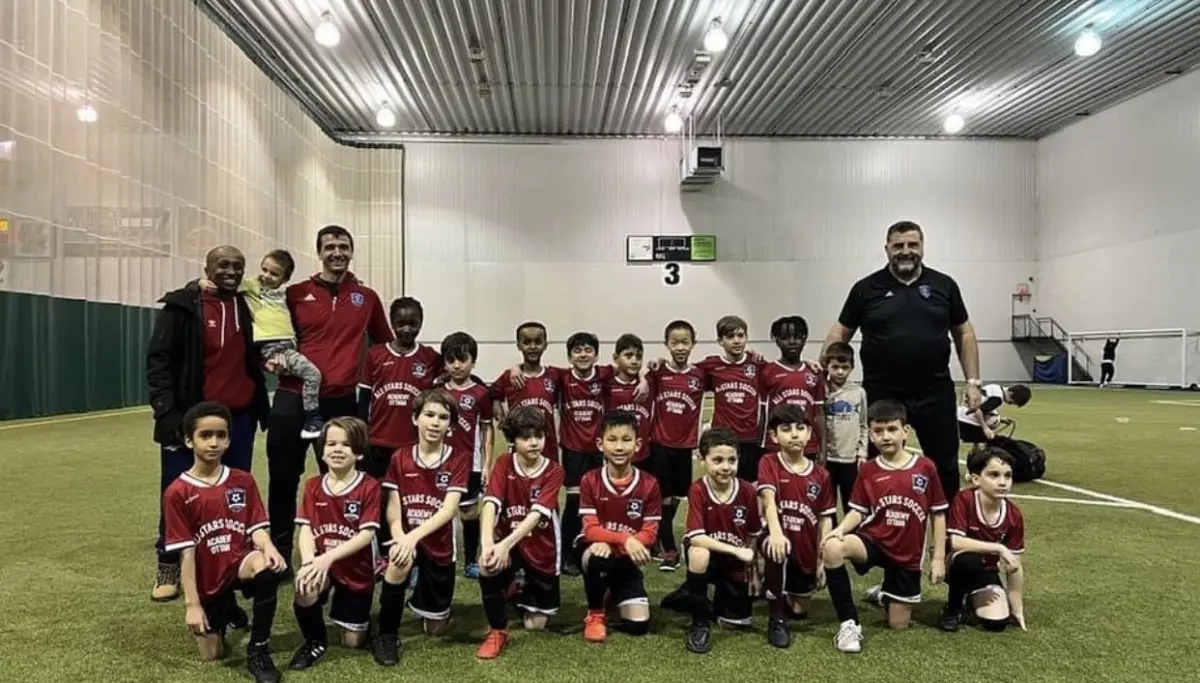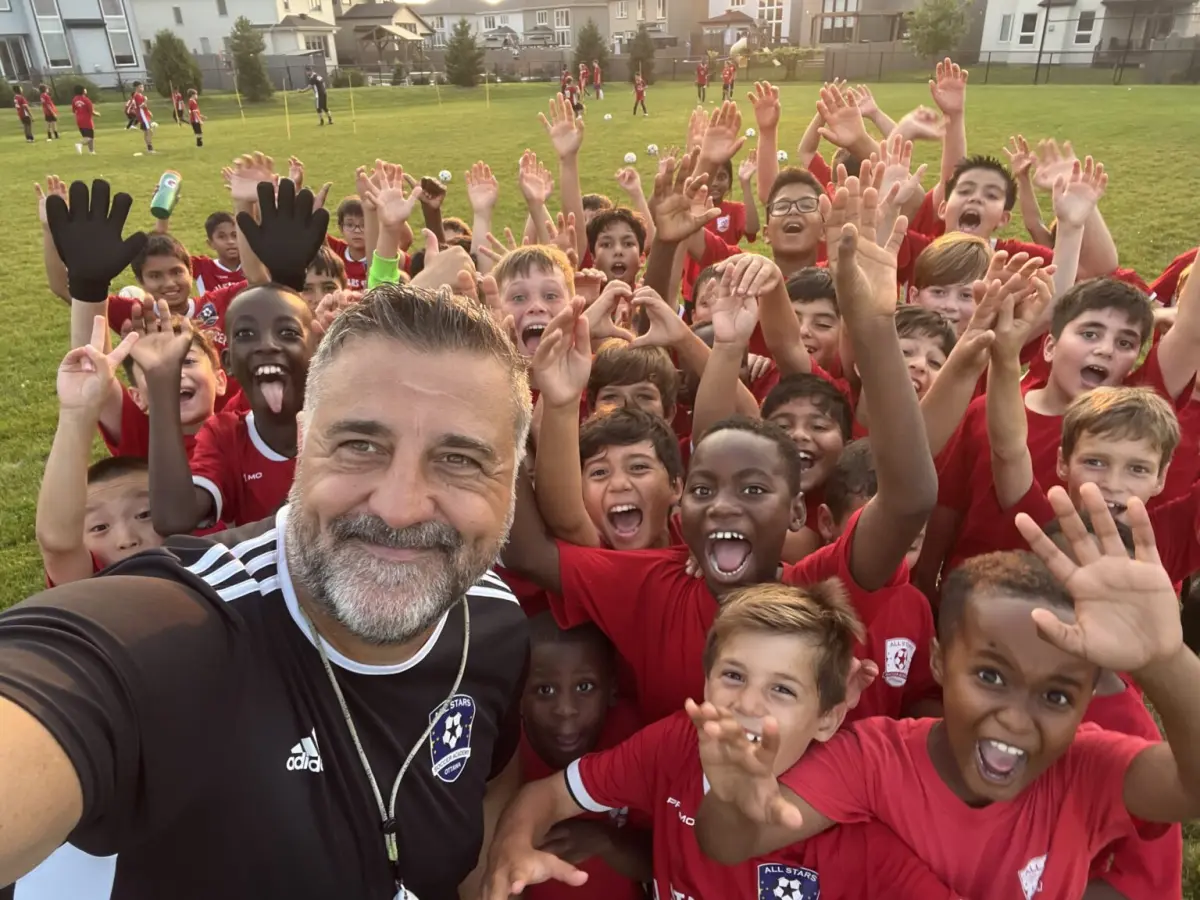

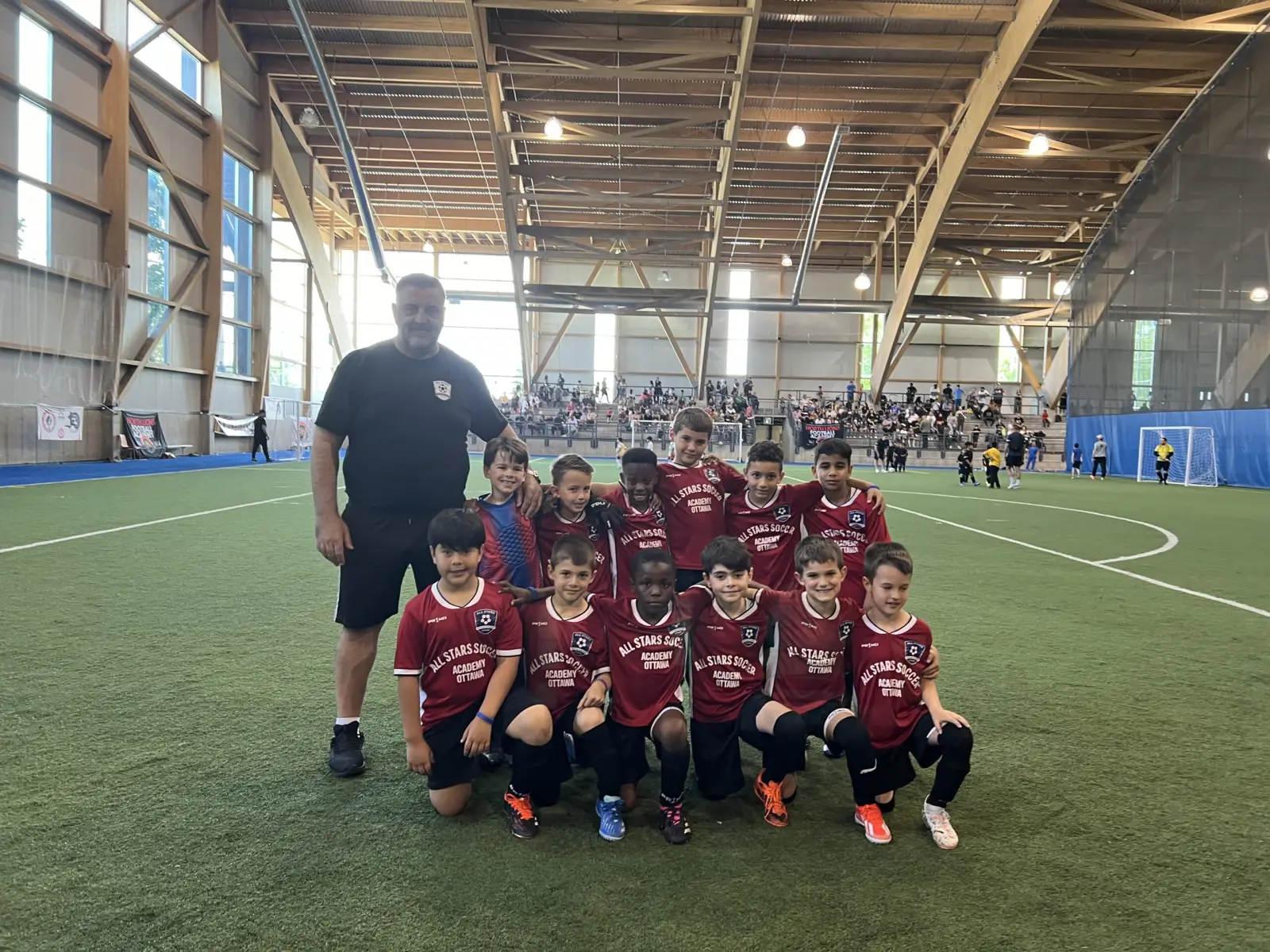
From late fall to spring, most youth soccer around Ottawa moves indoors. For many players, winter is where the biggest jumps happen: sessions are consistent, nobody loses a practice to rain, and the fast surface rewards good technique. This guide covers what parents need to know about winter indoor soccer in Ottawa, from footwear to winter roads. It is part of our off-season soccer training plan.
Footwear: turf shoes, not long cleats
Indoor artificial turf usually calls for turf shoes, with lots of short rubber studs, or flat indoor shoes, depending on the surface. Long moulded cleats can grip too much on turf, put extra stress on ankles and knees, and are often not allowed. Ask the program which footwear it expects before the first session.
A few practical tips:
- Buy shoes that fit now, with a thumb's width at the toe, rather than two sizes too big "to grow into". Loose shoes make close control harder and can cause blisters.
- Bring indoor shoes in a bag and change inside. Wet, salty winter boots and turf do not mix, and many facilities ask players not to wear street footwear on the field.
- Shin pads are still part of the kit indoors.
Dress for two temperatures
It is cold in the parking lot and warm on the field. A light training top under a warm jacket works well, along with a toque and gloves for the walk in. Pack a full water bottle: indoor air is often dry, and players get thirsty faster than they expect. Our training bag checklist covers everything else, from spare socks to a snack for the ride home.
After training, put a dry layer on before heading back outside. A sweaty player getting into a cold car is uncomfortable at best.
How indoor turf changes the game
The ball runs faster and truer on indoor turf than on bumpy grass. That rewards a clean first touch, quick passing and close control in tight spaces, which is exactly what winter technical training focuses on. At All Stars, sessions work on ball mastery, passing and receiving, shooting, defending, attacking and the confidence to play out from the back. Players who spend a winter indoors usually come back to grass with sharper control and quicker feet.
There are a few adjustments to expect:
- Bounces are lower and more predictable, so receiving feels easier at first. Going back to grass in spring can take a few sessions to adjust.
- Turf can be abrasive. Long sleeves or sliding shorts help if your player likes to go to ground, and scrapes should be cleaned properly after training.
- Space can feel tighter, which forces quicker decisions. That is a good thing for development.
Keep touches going between sessions
Winter evenings are long, and a basement or garage is perfect for short skill work. Our 15-minute ball mastery routine at home is designed for small spaces and needs only a ball. A few short home sessions a week make every coached session more productive, because the coach can build on touches the player already owns.
Plan for winter roads
Snow and early darkness are the main reasons families miss winter sessions. Give yourself a buffer, keep a winter kit in the car (blanket, scraper, phone charger, snacks) and agree with the coach how bad-weather days are handled. If roads look unsafe, missing one session is always the right call.
Players travel to our training base on Rouncey Rd in Kanata from both rural and city communities. Families from Dunrobin, Woodlawn and Pakenham in the north-west, and from Ashton and Munster to the south-west, know their rural roads well and tend to plan around them. City families from places like Westboro should also allow for Queensway traffic on weekday evenings. You can check the drive time from your community and the routes we suggest.
Sharing the driving is the easiest way to keep attendance steady through the winter. Our guide to carpooling to training has practical tips for setting it up.
Watch the total load
Winter can quietly become the busiest time of year: indoor soccer, school teams, a second club, hockey or basketball. Every one of those is good on its own, but together they can add up to too much. Make sure there is at least one full rest day each week, and read our article on rest, recovery and avoiding youth soccer burnout for the warning signs to look for.
Keep it social
Winter can be isolating for kids. Training with the same group every week keeps friendships going until the outdoor season returns, and players who look forward to seeing their teammates rarely need to be talked into going. At All Stars, coaches aim to build a family-like environment built on respect and hard, honest work, and that matters just as much in February as it does in June.
Getting started this winter
All Stars runs development programs at one, two or four sessions a week, and competitive programs of 3, 6 or 12 months, for boys and girls aged 5 to 16. You can see our winter-friendly development and competitive programs with current prices, or register for a free All Stars player profile to take the first step.
Questions parents ask
Can my child wear outdoor cleats on indoor turf?
Usually not. Most indoor turf calls for turf shoes or flat indoor shoes, and long cleats are often not allowed. Check with the program before the first session.
What should we do if the roads are bad on a training night?
Stay home. Missing one session will not affect development, and safety comes first. Let the coach know so they are not waiting for your player.
Will indoor training make it harder to play on grass in spring?
There is usually a short adjustment period because the ball bounces and rolls differently. Most players adapt within a few sessions and keep the sharper touch they built indoors.