
Ask experienced youth coaches which years matter most for technique, and many will point to roughly ages 9 to 12. Players at this stage can concentrate for longer, understand simple ideas about space and teamwork, and repeat a skill until it becomes automatic. Growth spurts have usually not yet arrived, so coordination is often at its most stable. It is the ideal time to build the U9-U12 soccer skills a player will rely on for the rest of their playing life.
This article is part of our guide to youth soccer development by age. If your player is just finishing the early years, our article on what to expect in U6 to U8 soccer covers the foundations this stage builds on.
The core skills to build
1. Ball mastery
Ball mastery means being comfortable touching the ball with every surface of both feet: inside, outside, sole and laces. It is the base for everything else. Players who master the ball can keep their eyes up, because they no longer need to stare at their feet. Short, frequent repetitions of rolls, pull-backs, inside-outside touches and turns build this comfort quickly.
2. Passing and receiving
At this age, players should learn to pass accurately with the inside of both feet over short and medium distances, and to receive the ball with a controlled first touch that sets up their next action. A good first touch moves the ball out of pressure and into space, rather than stopping it dead under the body.
3. Striking and shooting
Proper striking technique, including a planted standing foot, a locked ankle and contact through the middle of the ball, is far easier to learn now than to correct later. Players should practise finishing with both feet and from different angles.
4. 1v1 attacking
Beating a defender takes a few reliable moves, a change of pace and the courage to try. Coaches should encourage players to take people on in the right areas, and accept that mistakes are part of learning.
5. Defending basics
Good defending is a skill, not just effort. Players can learn to approach quickly then slow down, stay on their feet, show attackers to one side and stay patient. These habits become much more important in the teenage years.
Game understanding starts here
Technique and decision-making grow together. Small-sided games remain the most valuable part of training because every player is involved and must constantly choose: dribble, pass or shoot? Players also begin to understand roles and positions, but should still rotate so they learn the whole pitch.
This is also the right age to introduce composure on the ball near your own goal. Building attacks with short passes from the goalkeeper and defenders teaches players to stay calm under pressure, a skill explored in our guide to playing out from the back.
Practising between sessions
Coached sessions correct technique; home practice makes it automatic. Fifteen focused minutes a few times a week is more valuable than an occasional long session. A simple routine might look like this:
- Warm-up touches (3 minutes): toe taps, inside-inside touches and sole rolls, alternating feet.
- Turns and changes of direction (4 minutes): drag-backs, inside and outside cuts around two markers.
- Wall passing (5 minutes): pass against a wall or rebounder with each foot, controlling the return with the opposite foot.
- Weak-foot finish (3 minutes): a few controlled strikes at a target with the weaker foot.
For a ready-made plan, see our 15-minute ball mastery routine for home.
The mental side
Players aged 9 to 12 are becoming more aware of how they compare with others. Some feel pressure for the first time. Parents can help by praising effort and improvement rather than goals or results, and by asking players what they are working on. Coaches at All Stars also teach discipline, self-control and respect, which help players handle mistakes and setbacks calmly.
Looking ahead
The technique built now carries players through the changes of the teenage years, when growth spurts can temporarily disrupt coordination and training becomes more tactical and physical. Our guide to U13-U16 soccer training and growth spurts explains what comes next and why a strong technical base matters so much.
Training frequency at this age
Many players in this age band are ready for more than one session a week, especially if they are enjoying it. All Stars development programs offer one, two or four sessions a week, and four sessions is about six hours of soccer. More is not always better, though: keep at least one full rest day and leave room for other sports. Our article on choosing one, two or four sessions a week can help you decide.
Training with All Stars
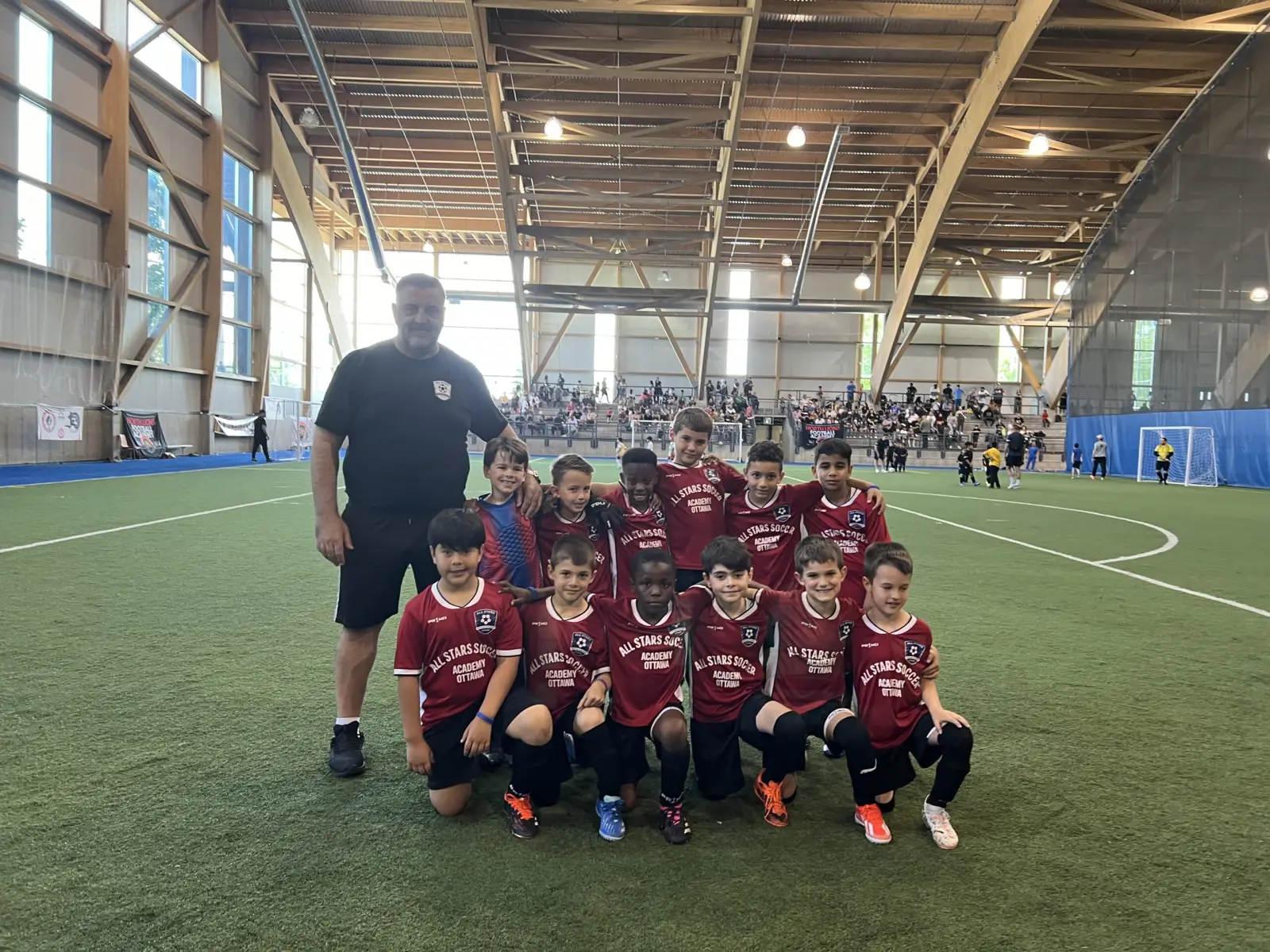
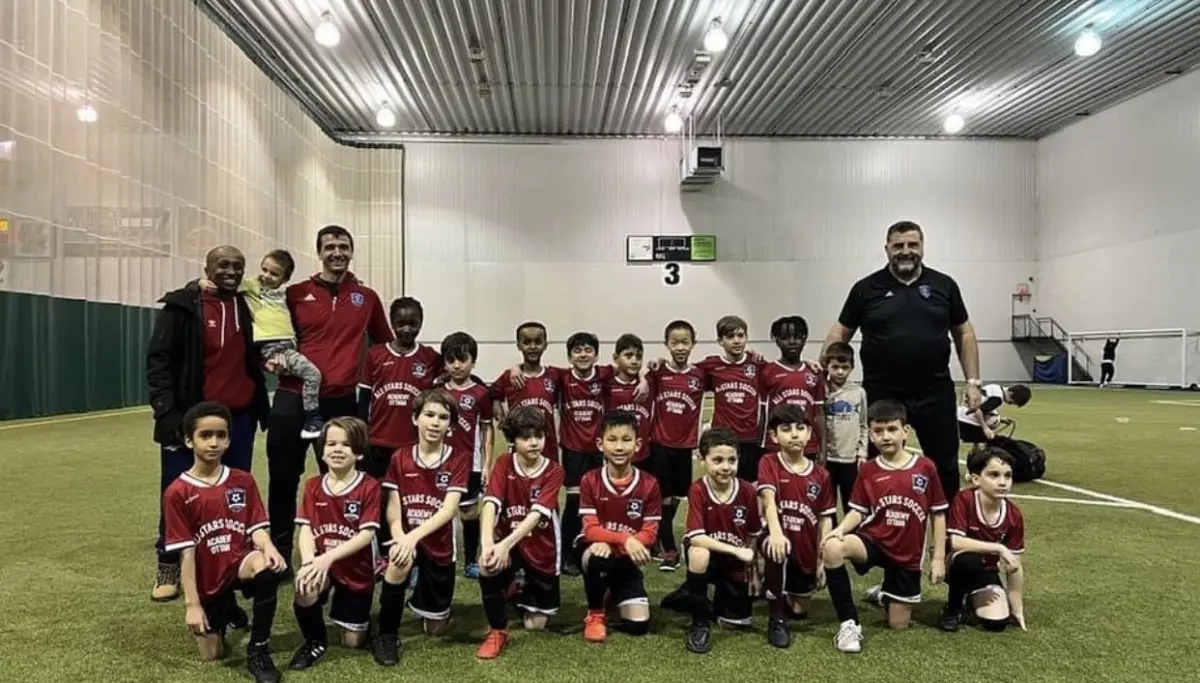
Our sessions for this age group develop ball mastery, passing and receiving, shooting, defending and attacking, with plenty of small-sided play. Players travel to our training base on Rouncey Rd in Kanata from Stittsville and Nepean, and from further afield in Manotick and Almonte.
You can compare development and competitive programs for ages 9 to 12 and check current prices on the programs page. When your player is ready, sign up for a free All Stars player profile.
Questions parents ask
How much should a 10 year old practise at home?
Short and regular works best: around fifteen focused minutes a few times a week, on top of coached sessions. Stop while it is still fun so your player looks forward to the next time.
Should my child pick a position by age 12?
Most coaches prefer players to keep trying different positions through this stage. Understanding the game from several roles makes players more adaptable when positions become more settled later.
My child's weak foot is very weak. Is it too late?
No. This age is a great time to improve it. Short, regular weak-foot practice, starting with simple passes against a wall, makes a noticeable difference over a season.