

Development
One, two or four sessions a week. Four sessions add up to about six hours of soccer weekly.
Appleton is a small Mississippi Mills community on the Mississippi River, tucked between Almonte and Carleton Place, and families there know that most activities involve a drive. If you are looking for technical soccer training for Appleton players, All Stars Soccer Academy in Kanata is about 29 minutes away, with coaching built around clean technique, good habits and steady improvement for children aged 4 to 16.
About 29 minutes / 30 km from central Appleton to our training base on Rouncey Rd in Kanata, calculated with OSRM on OpenStreetMap data without traffic. Allow extra time at rush hour and in winter.
Winter (indoor at the OZ Dome, Carp): about 23 min / 22.5 km from central Appleton to OZ Dome, 221 Westbrook Rd, Carp, ON K0A 1L0. Winter route: River Road, Appleton Sideroad, McArton Road and Upper Dwyer Hill Road, then Westbrook Road.
Measured from central Appleton with no traffic, the trip to 555 Rouncey Rd is about 30 km. Unlike most nearby towns, the opening part of this drive is on country roads. River Road (County Road 11) takes you about 1 km out of the village, then Appleton Sideroad (County Road 17) runs roughly 1.7 km before you turn onto McArton Road, the longest local leg at about 5.5 km.
A short kilometre on Upper Dwyer Hill Road brings you to Highway 7. You follow Highway 7 east for about 9.2 km, stay with it as it joins Highway 417, and ride the Queensway for roughly 4.9 km. The last piece is the Terry Fox Drive exit and about 3.6 km south toward Rouncey Rd.
So roughly a third of the distance is rural road and the rest is highway or Kanata arterial. That split matters when you plan around weather.
Sideroads are usually cleared after the main highways, so after a snowfall the slowest part of the trip may be the first ten minutes rather than the Queensway. On those days, leave early and drive the country section gently; once you reach Highway 7 conditions tend to improve. Winter training is held indoors at the OZ Dome, 221 Westbrook Rd in Carp, roughly 23 minutes (22.5 km) from home without traffic. Families are notified when a session is cancelled because of the weather.
In the other direction, weekday evening traffic builds on Highway 417 and Terry Fox Drive in Kanata. If a session falls in the weekday rush, add a margin of ten minutes or so. Outside the weekday rush, the drive is usually close to the free-flow time.
Ask the academy about drop-off when you register, so you know exactly where to go for the first session. The academy contact details are online, and the staff answer at 613-558-4301 or on the cell at 613-864-5882. There is free parking at 555 Rouncey Rd.
A packed bag helps too. Our training bag checklist for young players covers water, shin pads and the small items that get forgotten on a rural drive.
Carleton Place families drive the same Highway 7, which makes them natural carpool partners: an Appleton parent can meet a Carleton Place family where the routes come together, and the two households take turns. Almonte is also close by, so a three-family rota across the villages is realistic.
Agree the basics before the season starts: who drives which day, how late is too late to cancel, and what happens on storm days. A written rota avoids surprises.
Technique is the backbone of the academy's work. Players spend time on ball mastery, passing and receiving, and decision-making, and the coaches set a standard of technical excellence that applies to every age group. The aim is a player who controls the ball cleanly with either foot and knows what to do next.
Shooting practice teaches young players to strike with the laces and the inside of the foot, to keep their head steady and to pick a corner rather than blasting at the goalkeeper. Defending one on one is the other side of the coin: patience, body shape and timing a tackle, rather than diving in.
Coaches also teach attacking play, playing out from the back and confidence on the ball, and they instill discipline, self-control and respect throughout. The environment is meant to feel like family: hard and honest work, with friends alongside.
A country property often has more room for a ball than a city backyard, and that is a real advantage. Ten or fifteen minutes against a wall or a fence, a few days a week, adds up quickly between academy sessions. Simple passes off a wall with the left foot, then the right, train the first touch and the weaker side at the same time.
If you would like a structure, our piece on building a two-footed player at home sets out short exercises that need nothing more than a ball and a flat surface. Home practice works best when it is short, regular and fun; it supports the coaching rather than replacing it, and it gives a child something to show off at the next session.
The development program runs at one, two or four sessions a week; four sessions adds up to about six hours of soccer. From Appleton, one session is a gentle start, two gives a regular rhythm, and four suits a committed player with a shared driving plan.
The Competitive program asks for a commitment of 3, 6 or 12 months. Each program comes with one free academy T-shirt. Fees and the cancellation policy are set out on the programs and pricing page; when you have chosen, you can complete registration for Appleton players online.
All Stars runs boys and girls soccer for ages 4 to 16, and players are grouped so that each one is challenged. A newer player is not thrown in with the strongest group, and an experienced player is not left bored. The coaching staff, led by UEFA PRO licence holder Samir Karaga, group players so each one is challenged.
Program details from our programs page. Prices, schedules and the cancellation policy are listed there.
One, two or four sessions a week. Four sessions add up to about six hours of soccer weekly.
Longer commitments of 3, 6 or 12 months for players ready to push on.
Boys and girls, grouped so every player is challenged.
Ball mastery, passing and receiving, shooting, defending, attacking and playing out from the back.
Head coach Samir Karaga holds UEFA PRO and Canada Soccer National B credentials. Meet the coaches
Each program includes one free academy T-shirt.
From central Appleton, take River Road and Appleton Sideroad to McArton Road, then Upper Dwyer Hill Road to Highway 7. Head east, stay on as it joins Highway 417, take the Terry Fox Drive exit and drive south. Without traffic it is about 30 km and 29 minutes.
Often the country roads near the village. River Road, Appleton Sideroad and McArton Road may be cleared after the highways, so the first few kilometres can take longer than usual. Once you reach Highway 7 the drive is normally steadier. Leave extra time and check conditions before you go. Through the winter, sessions are indoors at the OZ Dome on Westbrook Rd in Carp, which is about 23 minutes and 22.5 km from home without traffic. If a session is cancelled for weather, the academy lets families know.
Carleton Place families use the same Highway 7, and Almonte is close by. A rota with one or two of those families means each household drives less often. Agree on cancellation rules and storm-day plans before the season starts.
Shooting is one of the core topics, together with ball mastery, passing and receiving, defending, attacking, playing out from the back and decision-making. The balance depends on the age group and what the players need, so shooting practice appears regularly rather than every session.
No. Boys and girls from 4 to 16 are welcome, and players are grouped so each one is challenged at the right level. Beginners and experienced players both fit, and the coaches place children after watching them train.
Compare the Development and Competitive options on the programs page, then register online through the academy's Play 2 Earn Sports link. Ask about drop-off at the same time. Questions can go to 613-558-4301. There is free parking.
It is not required, but short, regular practice helps. A few minutes of wall passes or ball mastery between sessions builds the habits the coaches work on. Keep it light and enjoyable; the academy sessions remain the main place where players learn and are corrected.
Guides that help with training, development and the drive.
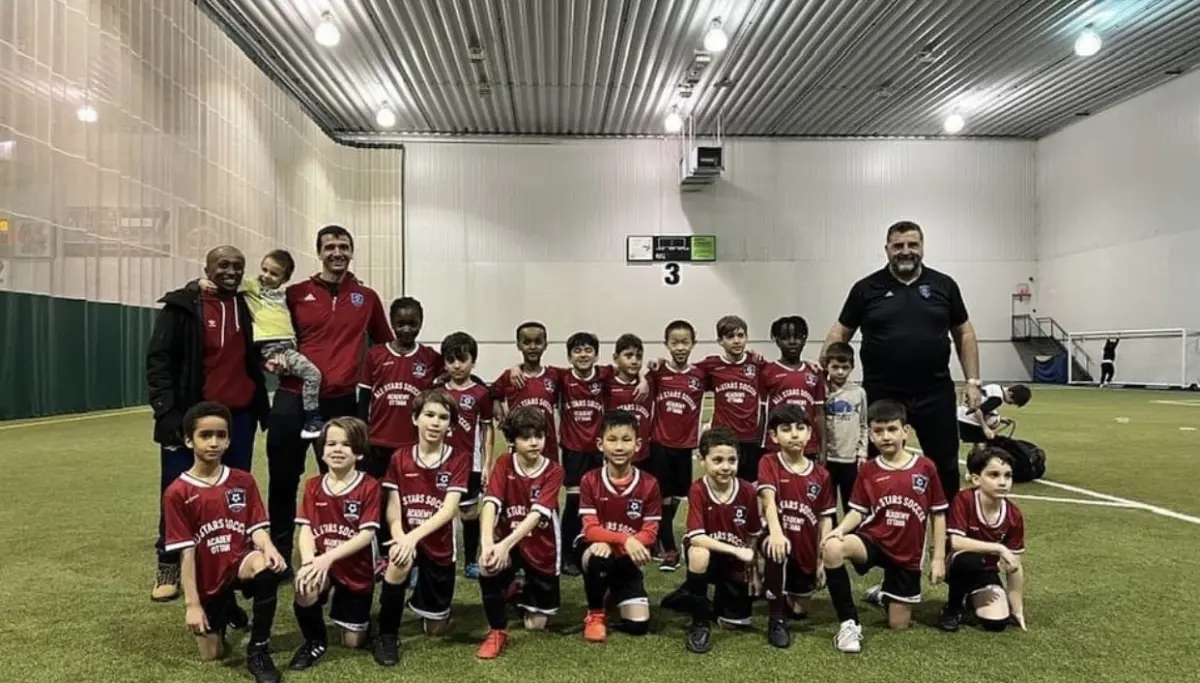
The U9-U12 soccer skills that matter most: ball mastery, passing and receiving, striking and 1v1 play, plus how to practise them between sessions.
Read the article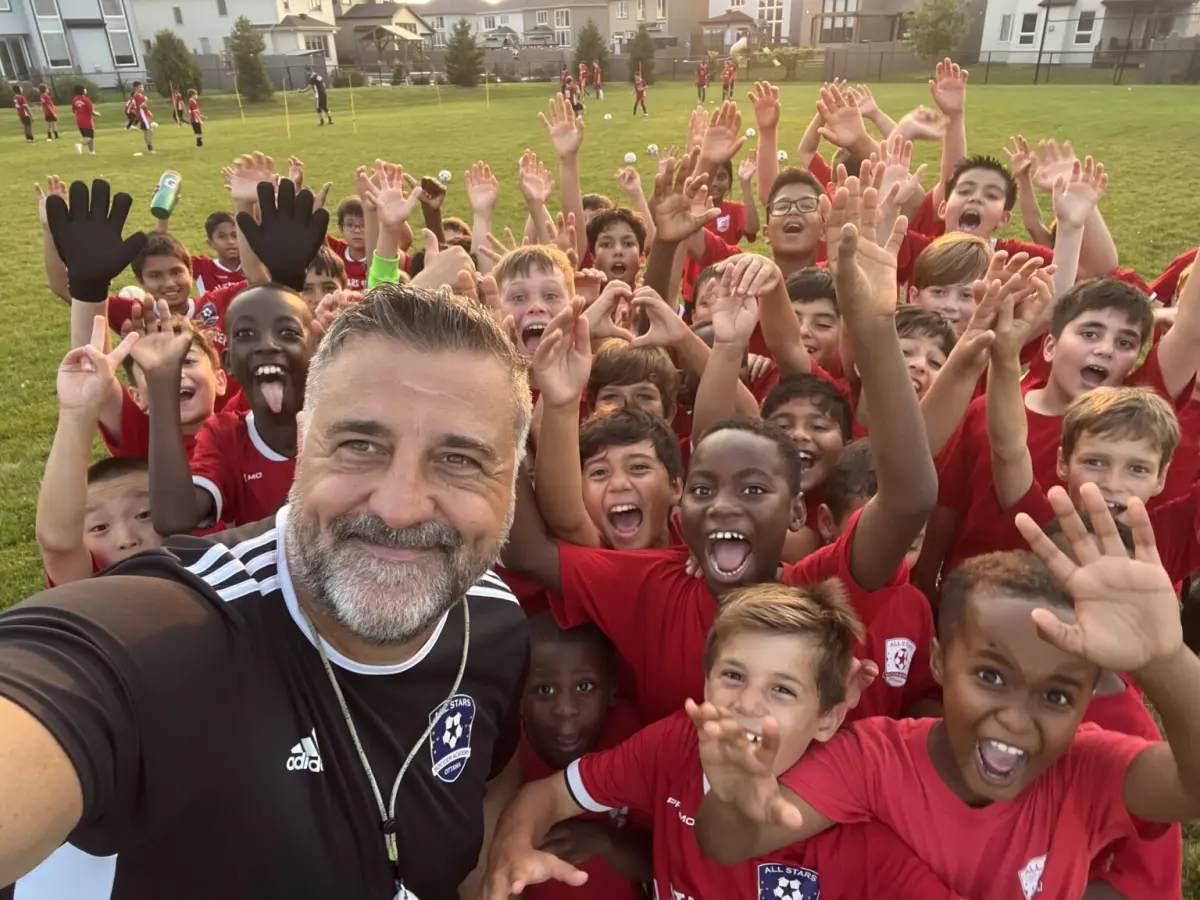
Weak foot training at home for young soccer players: why it matters, a simple weekly plan, wall-pass drills and how to keep frustration low.
Read the articleHow to set up a soccer carpool in Ottawa's west end and the Valley: route groups by shared road, ground rules, car seats and winter calls.
Read the articleA soccer training bag checklist for young players: every-session essentials, outdoor and winter extras, and the things parents forget to pack.
Read the articlePlayers travel from Appleton to train with All Stars. Pick a program and register your player.