

Development
One, two or four sessions a week. Four sessions add up to about six hours of soccer weekly.
Defending is the part of the game many young players enjoy least, right up until they discover how satisfying a clean, well-timed tackle feels. All Stars Soccer Academy provides defending skills soccer training for Fitzroy Harbour players at 555 Rouncey Rd in Kanata, about 41 minutes and 39.2 km south by car. Read on for the Carp Road route, timing advice, carpool ideas and how defending fits into a full technical program.
About 41 minutes / 39.2 km from central Fitzroy Harbour to our training base on Rouncey Rd in Kanata, calculated with OSRM on OpenStreetMap data without traffic. Allow extra time at rush hour and in winter.
Winter (indoor at the OZ Dome, Carp): about 34 min / 31.3 km from central Fitzroy Harbour to OZ Dome, 221 Westbrook Rd, Carp, ON K0A 1L0. Winter route: Harbour Street and Carp Road, then Westbrook Road.
Leave on Harbour Street for 1.9 km and it becomes Carp Road, which carries you 27.9 km south through the village of Carp. That long country road is the heart of the trip. A 0.5 km ramp takes you onto Hwy 417 for only 3.9 km, then a 0.7 km exit drops you onto Terry Fox Drive for the final 3.6 km to Rouncey Rd.
Measured from central Fitzroy Harbour without traffic, the drive is about 41 minutes and 39.2 km. It is a simple route with few turns, though nearly all of it is rural road rather than highway.
Carp Road slows as it passes through the village of Carp, so allow for lower speeds there. The short highway hop near Kanata and the Terry Fox Drive exit are where weekday traffic builds; if your session falls in the weekday rush, add a buffer for that final stretch.
In winter, a long rural road like Carp Road can drift and turn slick after a storm, and rural roads are usually cleared after the main city routes. Check conditions before you go and leave extra time on snowy evenings. Through the winter, sessions are indoors at the OZ Dome on Westbrook Rd in Carp, which is about 34 minutes and 31.3 km from home without traffic. When weather forces a cancellation, the academy notifies families.
Good defending starts with the body: a low, balanced stance, side-on so the player can turn either way. From there, players learn to close down at the right speed, show the attacker toward the touchline, stay patient and choose the moment to win the ball. Recovery runs, covering a teammate and talking to each other are all part of it.
Defending also connects to the rest of the game. Once the ball is won, players need passing and receiving and calm decisions to keep it, including playing out from the back. Shooting practice is useful from the other side too: defenders who know how attackers set up a shot read the danger earlier.
Coaches instill discipline, self-control and respect, which matter most in defending, where frustration can lead to rash challenges. The academy's culture of hard and honest work fits defending well, because effort without the ball is something every player can control.
U9 to U12 soccer is a good time to form defensive habits, before poor ones settle in. Players are old enough to understand angles and positioning, and young enough to absorb new ideas quickly. The academy trains boys and girls from 4 to 16 and groups them so each player is challenged at the right level.
The guide to U9 to U12 skill development explains what else matters in those years.
Parents can help without turning the backyard into a training ground. Play a gentle one-against-one game where your child's only job is to stay goal-side and keep you in front of them, never diving in. Praise patience and good body shape rather than how often they win the ball.
Watching a match together helps too. Ask your child to follow one defender for a few minutes and notice when that player steps forward, when they drop off and how they talk to teammates. Small observations like these make the next session at the academy click faster.
The development program runs at 1, 2 or 4 sessions a week, and four sessions provides about 6 hours of soccer a week. Given the length of the drive, one or two sessions is a sensible place to start. Players ready for competitive soccer can choose a commitment of 3, 6 or 12 months.
Every program includes one free academy T-shirt, and prices and the cancellation policy are on the All Stars programs and prices page. If you are weighing an academy against house league, this comparison of academy and house league soccer may help.
Whichever plan you pick, think about the season as a whole. A long country drive is easier to sustain at a steady one or two sessions than at four sessions that have to be cut back in January, and a young defender learns most from regular, uninterrupted repetition.
Carp families are directly on your route down Carp Road, which makes them the easiest carpool partners. Kinburn, Galetta and Woodlawn families also travel to Kanata, though by other roads. A rota with a Carp family can cut your driving in half without adding a detour.
For the longest rural part of the drive, pairing with a second Fitzroy Harbour household is worth considering as well, so two cars do not travel the same 27.9 km of Carp Road side by side. Our carpooling guide for west of Ottawa has a sample rota.
Fitzroy Harbour sits where the Carp River meets the Ottawa River, and Fitzroy Provincial Park at the mouth of the Carp River is the landmark most visitors know. Before the first session, confirm drop-off with the academy through the All Stars contact page or at 613-558-4301, and meet head coach Samir Karaga and the staff on the coaches page. Parking at the Rouncey Rd base is free.
Program details from our programs page. Prices, schedules and the cancellation policy are listed there.
One, two or four sessions a week. Four sessions add up to about six hours of soccer weekly.
Longer commitments of 3, 6 or 12 months for players ready to push on.
Boys and girls, grouped so every player is challenged.
Ball mastery, passing and receiving, shooting, defending, attacking and playing out from the back.
Head coach Samir Karaga holds UEFA PRO and Canada Soccer National B credentials. Meet the coaches
Each program includes one free academy T-shirt.
Follow Harbour Street as it becomes Carp Road, continue south through Carp to Hwy 417, take the highway briefly, then exit at Terry Fox Drive and head south to 555 Rouncey Rd. Measured from central Fitzroy Harbour without traffic, it is about 41 minutes and 39.2 km.
Yes. Carp Road runs through Carp, so expect lower speeds in the village. That also makes Carp families ideal carpool partners, because they are directly on your route. The busiest part on weekday afternoons is usually near the highway and the Terry Fox Drive exit.
No. Defending is one part of a full program that also covers ball mastery, passing and receiving, shooting, attacking, playing out from the back, decision-making and confidence. Players need all of these to be complete, so coaches work on them together.
Players aged 4 to 16 can learn to defend, but U9 to U12 is a particularly good window for building positioning and patience. Younger players learn the basics through games, while older players add tactics. Groups are arranged so every player is challenged.
Yes. Alongside the Development program, the academy offers competitive commitments of 3, 6 or 12 months. Starting with Development is one way to get used to the drive down Carp Road before moving to a competitive plan. Prices are on the programs page.
Choose a plan on the programs page and complete the online registration for All Stars. To ask about groups, drop-off, call 613-558-4301 or 613-864-5882. Each program includes one free academy T-shirt. Parking is free.
Carp Road is a long rural road, so it can drift and become slick after a storm, and it is usually cleared after the main city routes. Check conditions before leaving, allow extra time, and keep warm layers and a snack in the car for the drive home along the river. In winter, training moves indoors to the OZ Dome at 221 Westbrook Rd in Carp, about 34 minutes and 31.3 km away without traffic. Families are notified when a session is cancelled because of the weather.
Guides that help with training, development and the drive.
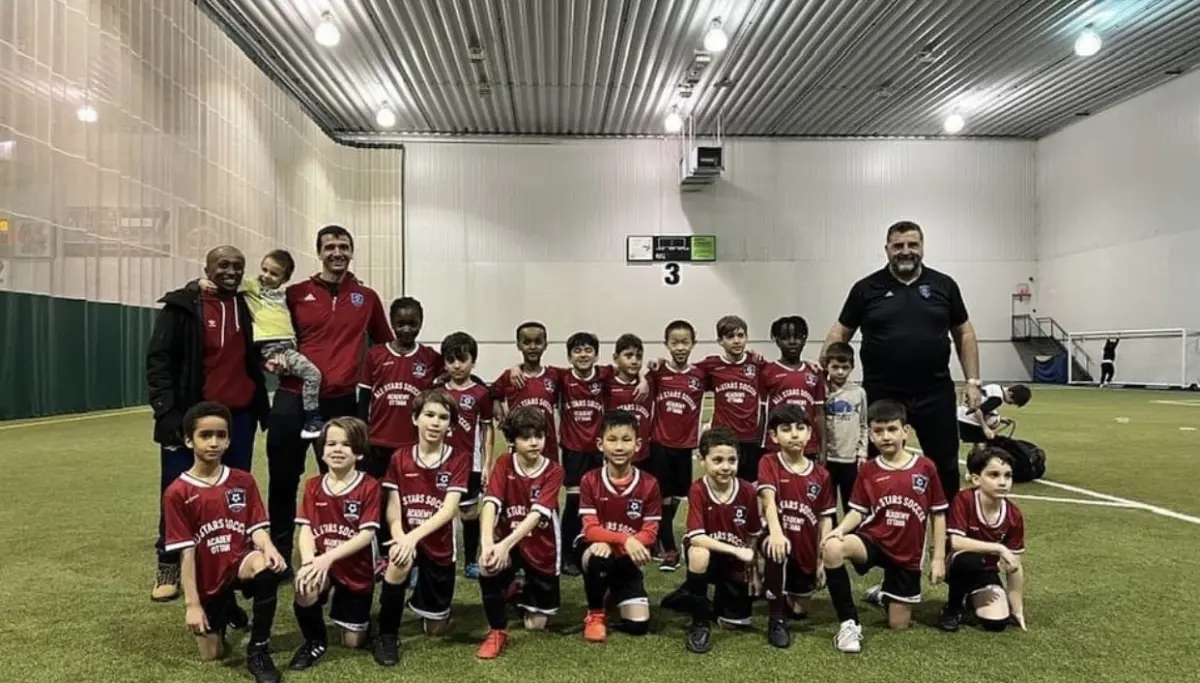
The U9-U12 soccer skills that matter most: ball mastery, passing and receiving, striking and 1v1 play, plus how to practise them between sessions.
Read the article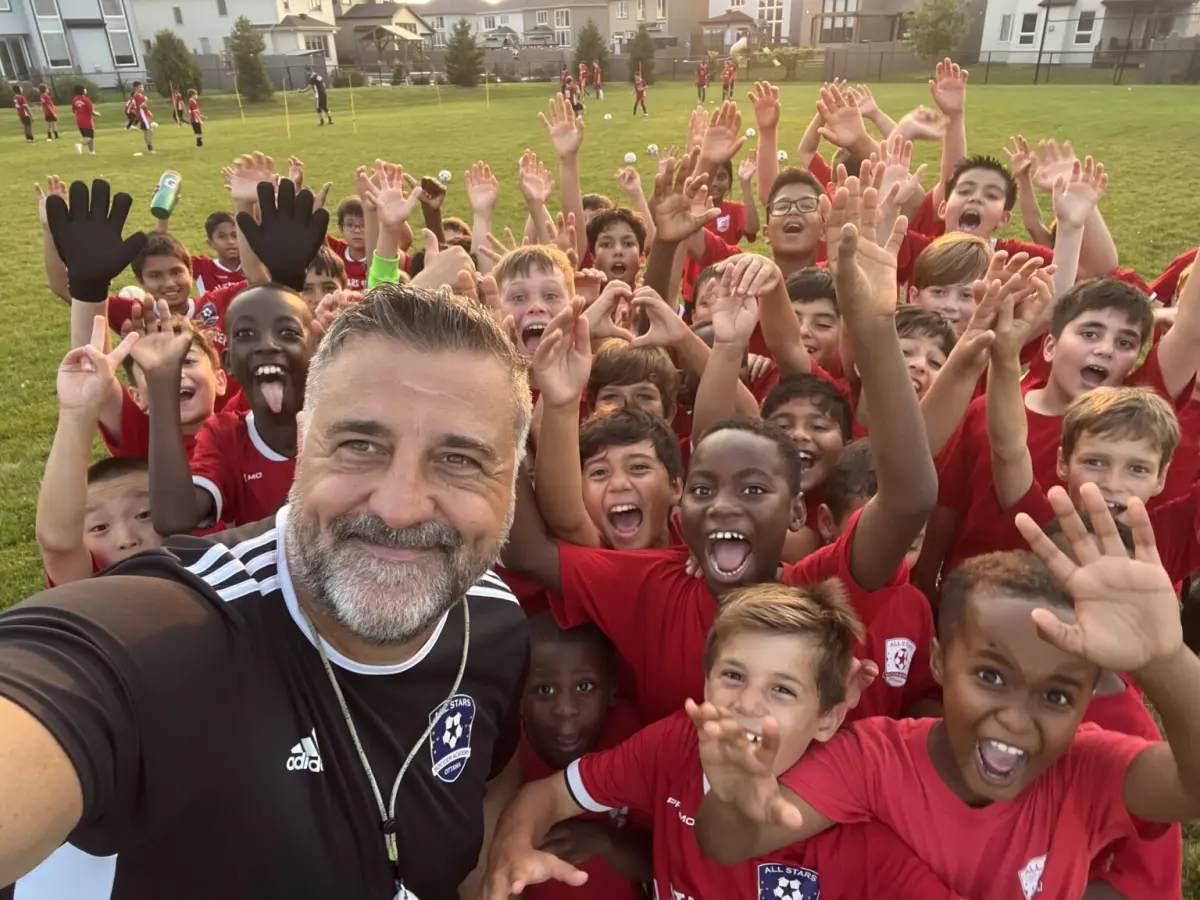
How to set up a soccer carpool in Ottawa's west end and the Valley: route groups by shared road, ground rules, car seats and winter calls.
Read the articleSoccer academy vs house league: a fair look at what each offers, who each suits, and how many families combine both for a balanced season.
Read the article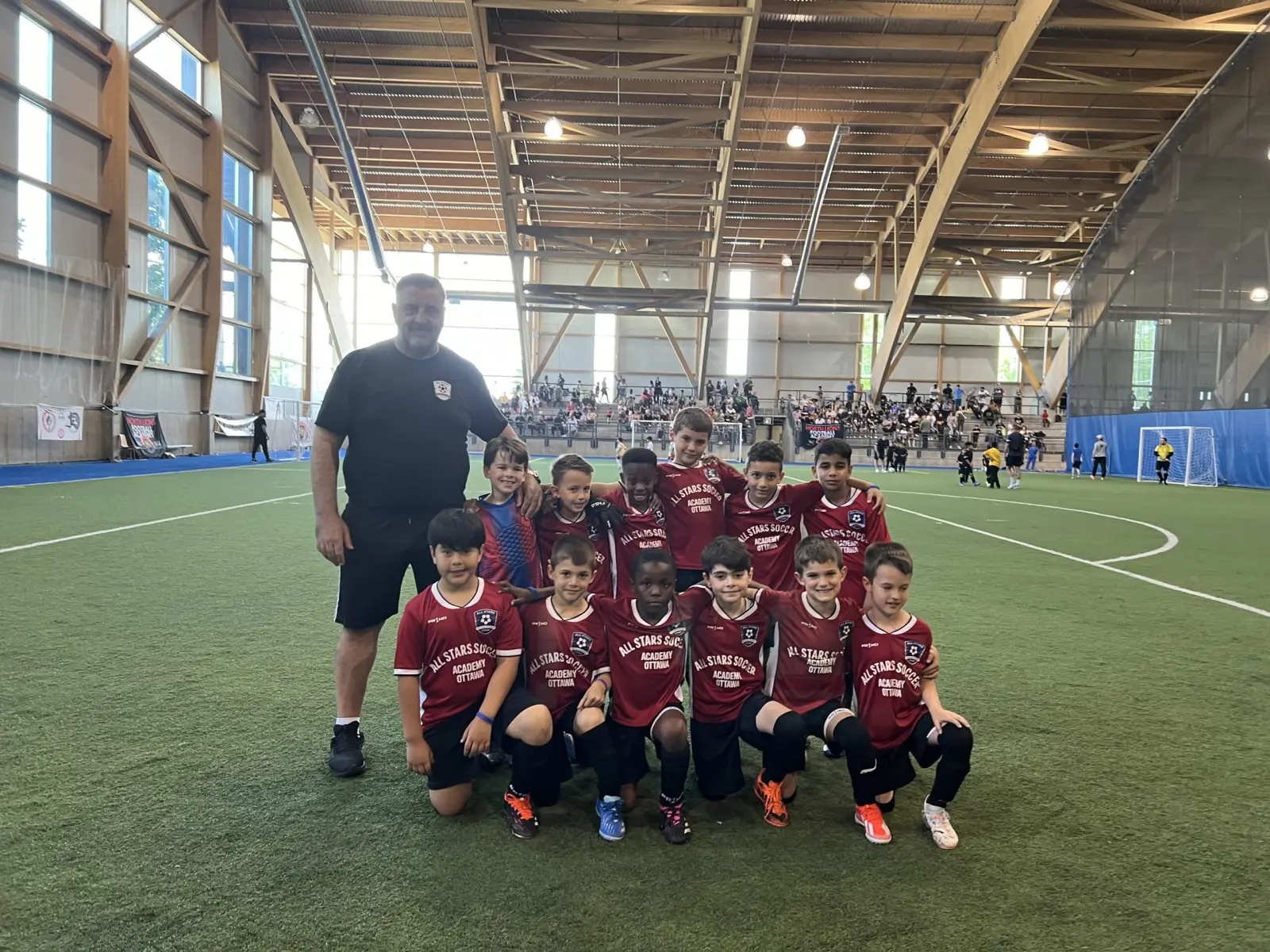
A parent's guide to youth soccer development by age: what players should learn from 4 to 16, how training changes, and how to support each stage.
Read the articlePlayers travel from Fitzroy Harbour to train with All Stars. Pick a program and register your player.